Only 6" of snow. Between husband using the blower on the driveway, and kids and I shoveling paths and barnyard and M-I-L's place, we were cleaned out by 9am. Not bad. And I l-o-v-e snow shoveling! What could be better than being out in the bright, crisp air, working hard while listening to the chickadees call?!
Tuesday night is Planning Night. Unless something happens to disrupt the schedule, kids go next door to M-I-L's house for Movie-and-Mac&Cheese Night w/Gramma, and I get 3 uninterrupted hours for school planning. Actually it rarely is a full, uninterrupted 3 hours. Sometimes M-I-L must work causing a late start. Sometimes husband is home early causing an early end. But even a couple of hours are great, and the few times when I do get the full 3 hours are so productive that I'm often ahead.
We use the Weaver Curriculum. My kids are 13 (7th grade), 9 (3rd grade), 5 (K), and almost 2. Since I refuse to go the textbook route and we're too spread out to combine in most curricula, Weaver is a great fit for us. After years of struggling to find something that would meet my qualifications, we started Weaver this summer and are really enjoying it.
One significant difference in the way we approach this curriculum is that we take 1 week per Bible lesson. The author laid it out for 2 days per Bible lesson, one to teach and one to review. This allows about 10-12 days per chapter or unit in most cases. I have found that to be insufficient time to really enjoy a unit study. The unit we're currently on, chapter 5, teaches about faithful obedience demonstrated by Abraham when he obeyed the command of God to "go to a land" He would show him. The unit topics are transportation & travel. We've done 2 weeks on the history and overview of transportation and the science behind it (ie. Newton's laws of motion and related ideas), 2 weeks on the Pilgrims (while continuing with the science studies), and we have 2 weeks coming up on flight and space travel. In addition, we're working through a book about explorers. I had wanted to talk about missionaries as well, but there just hasn't been time. We would have had to cover all of this material in 10 days following the planned schedule. To me, that makes a unit study about as exciting as a textbook. Strip all the fun out of it so you can learn in bits and pieces and get lots done really fast.
It convinces me again of my own theory on education: spiraling, or what I call the hummingbird method (sip a little here, a little there, round and round you go) works wonderfully for the skills subjects: math and language arts (and, I think, foreign language if someone would just develop that). However, content subjects: social studies and science, require time to delve in, connections to provoke interest, and projects to apply and accomplish the knowledge. Oddly enough, you see all kinds of educational developments that reverse this --trying to make skills subjects more entertaining and contents subjects like a deluge of knowledge that must be accomplished by a certain time (meaning we leave school with little to no recollection of what we learned in history).
Anyway, back to my planning. We are a few weeks away from completing chapter 5 of volume 1; I'm working on planning chapter 6. Chapter 6 teaches about famine and water beginning with the first famine in the Bible (or in the world) when Abraham went to Egypt. I'd previously outlined the 5 Bible lessons and gone through the 7th, 3rd and K objectives to select those I wanted to complete and plug them into the week where I felt they fit.
This going-through-the-objectives step is one most users seem to complain about with this curriculum. It's true that it can take a bit of time, and it's not something I want to include in the curriculum I'm hoping to write someday. On the other hand, I've found that the author included some great ideas and information in them. And reading thru them really helps to get a perspective on the unit.
So I had everything outlined and thought I'd be plugging it in to my lesson plan sheets, one of the final steps before we head into the new unit (we're about 3 weeks away). Instead I ended up making some fun revisions to my plan. I knew when I'd ended last time, I'd not been satisfied with the end result. It felt like we were jumping all over and trying to cover too many topics and too much material. In this chapter, we were supposed to cover famine, water --cycle, areas, aspects & uses, oceanography, and freshwater life. To me, each of those is a unit in itself. However, coming at it with fresh eyes, I had a fun idea dawn on me. After the week on famine, we will cover the rest of the info on water by following the water cycle. We'll begin with oceans and evaporation, proceed to clouds and condensation; then freshwater and absorption, and end with studying the aspects of water. This put it in order for me and helps to limit the areas to our focus: the part each plays in the water cycle.
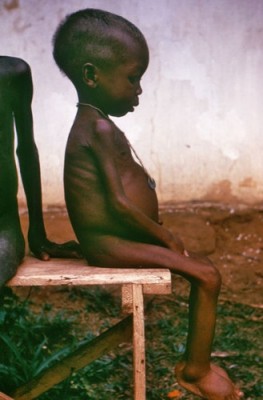
Having already looked up some info on famine and hunger and bookmarking some online sites about the water cycle, I ended by plugging in my planned ideas for our first week, leaving me with a nice sense of accomplishment. Next week, I'll continue mapping out the social studies/science part of our unit on my lesson plans along with some activity ideas. After that I plug in math and language arts lessons and order library books, and we're off!